



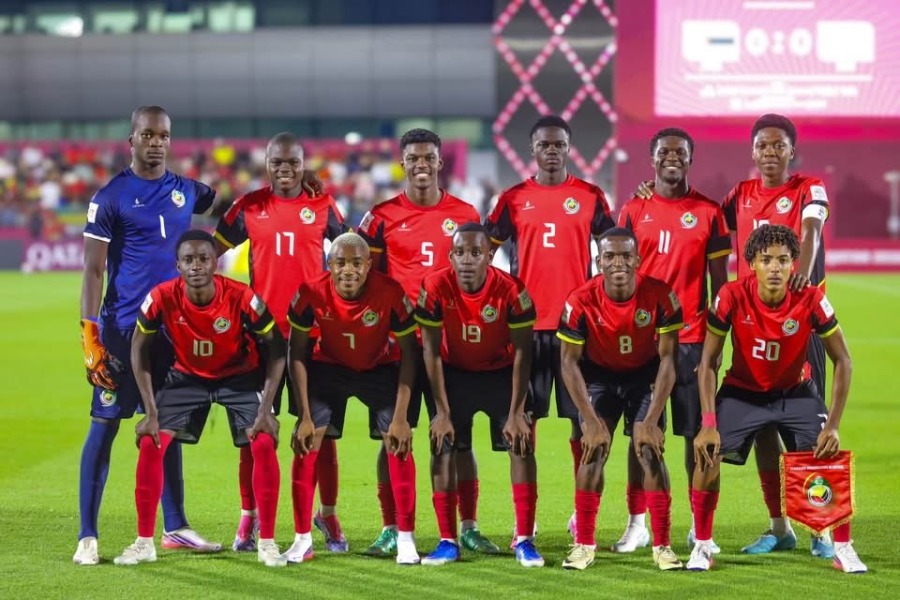
Former Nigeria midfielder Sambo Choji, in an exclusive interview with Africafoot, has noticed that tournament debutants Mozambique should take heart from their narrow 2-1 defeat to Argentina and insists Morocco have what it takes to win the FIFA U-17 World Cup.
Mozambique opened their campaign with a dominant 4-0 victory over Denmark before pushing South American giants Argentina close in their second group fixture. Despite the defeat, Choji—who won the competition with Nigeria’s Golden Eaglets in 1993—believes the Southern Africans are well-placed to reach the knockout stage if they stay disciplined in their final group match.
“For Mozambique to lose just 2-1 against Argentina is a very, very good performance and good result,” Choji told Africafoot. “Beating Denmark 4-0 is a great result as well. I think it’s something they can take and work on to their next game and come out with a positive result.”
“At the end of the day, if they don’t win that last match, they should try to get a draw, and they shouldn’t concede more because I think at the end of the day maybe best loser might even count.”
‘Winning is a culture’
With traditional African powerhouses Nigeria and Ghana absent from the tournament, 10 nations are flying the continent’s flag—including Uganda , Ivory Coast, Morocco, Egypt, Senegal, Mali and Mozambique.
Choji believes North African sides have set the standard in youth development and singled out Morocco as Africa’s strongest title contenders, while also backing Egypt to impress.
“I think the North African countries have shown us the way how to build a culture, a cultural team—because winning is also a culture,” the 1993 world champion explained. “If eventually they can implement what I’ve been seeing in the qualification before they reach the finals, I think Morocco would do us proud. Egypt will also do us proud.”
U-17 World Cup: Yemi Olarenwaju backs Senegal and Morocco to make impact
Preparation key to lifting the trophy
Reflecting on Nigeria’s 1993 triumph in Japan, Choji warned that talent alone is rarely enough at youth level without long-term planning.
“Sometimes in a tournament, you can’t predict,” he added. “Unlike ourselves, we had the best preparation ever in the history of this tournament. I don’t think a team has prepared in Africa for a year and a half for a tournament just like we did.
“We were in camp for over a year before the qualifiers and then another four months before the finals proper. So I think preparation matters a lot and we should try to build on that.”
