


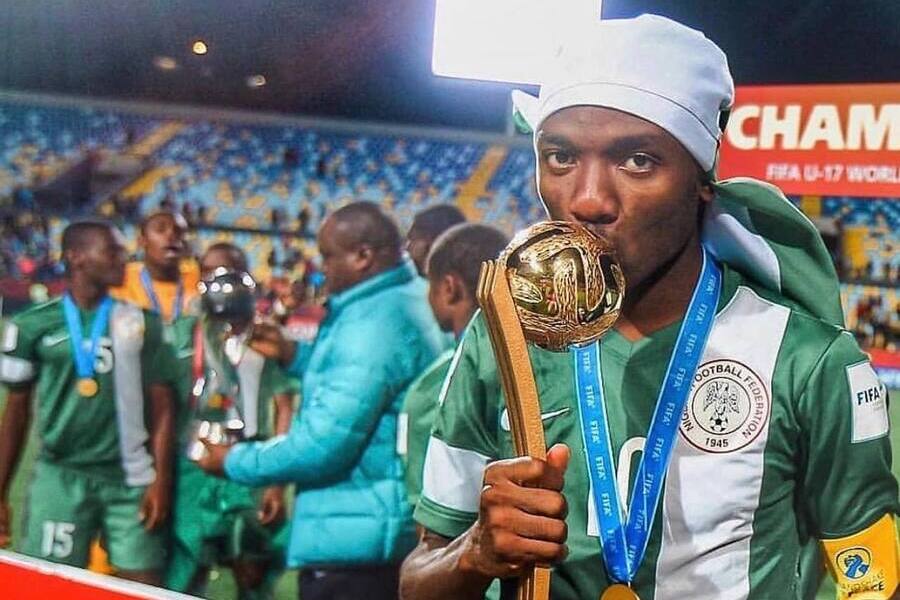
Africa’s history at the FIFA U-17 Men’s World Cup is not just about trophies. It is also a story of individual brilliance, extraordinary young talents and players who announced themselves on the international stage long before making their senior football careers.
The Golden Ball, awarded to the tournament’s outstanding player, the Golden Boot for the leading goalscorer and the Golden Glove for the best goalkeeper have provided a platform for some of Africa’s most memorable performances.
From the competition’s early years as the FIFA U-16 World Championship to its modern U-17 format, here is a look at the African footballers who have claimed these prestigious individual honours, in chronological order.
1987 – Philip Osondu and Mousse Traore
Nigeria’s Philip Osondu was named the tournament’s best player after playing a central role in the Golden Eaglets’ run to the final. His performances made him one of the most talked-about young African footballers of his generation.
Côte d’Ivoire’s Moussa Traoré, meanwhile, finished as the competition’s leading goalscorer with five goals. He capped his campaign with two goals in the third-place play-off against Italy, helping the Ivorians secure the bronze medal with a 2-1 victory.
Their achievements were particularly outstanding because they came in a tournament where Africa had two representatives among the leading individual performers. Osondu’s Golden Ball and Traoré’s Golden Boot remain important milestones in the continent’s youth football history.
Osimhen, Essien and other legends whose careers took off at the FIFA U-17 World Cup
1989 – Fodé Camara leads the scoring charts
Camara scored three goals, finishing level with four other players. However, Fodé Camara claimed the award because he had scored his goals in fewer minutes than his rivals.
Although the tournament’s Golden Ball went to Scotland’s James Will, Camara’s achievement gave Guinea a place among the competition’s individual award winners.
His performances also opened the door to senior international recognition, with the forward eventually earning 16 caps for Guinea.
U-17 World Cup 2026: Africafoot predicts how far 10 African nations can go
1991 – Nii Odartey Lamptey inspires Ghana to world glory
Ghana’s 1991 triumph in Italy was built around a gifted group of players, but Nii Odartey Lamptey stood out as the tournament’s most influential individual performer.
The midfielder scored four goals during the competition, including an important contribution in Ghana’s quarter-final victory over Brazil.
His creativity, movement and ability to influence attacking situations made him central to the Black Starlets’ campaign.
Ghana eventually defeated Spain 1-0 in the final, with Emmanuel Duah scoring the decisive goal to secure the country’s first FIFA U-17 world title.
Lamptey received the Golden Ball in recognition of his outstanding contribution. His performances were so impressive that Brazilian legend Pelé reportedly described him as a natural successor.
1993 – Daniel Addo and Wilson Oruma shine in an all-African final
The 1993 tournament in Japan was another memorable chapter in African youth football, with Nigeria and Ghana meeting in the final.
Ghana’s Daniel Addo claimed the Golden Ball after an impressive campaign in midfield. He scored three goals and was a driving force behind the Black Starlets’ progress to the final.
Nigeria, however, had its own individual star in Wilson Oruma.
The forward finished as the tournament’s leading scorer with six goals, playing a decisive role in the Golden Eaglets’ march to the title.
Oruma also made history in the final against Ghana, scoring after just three minutes to register what FIFA records as the fastest goal in a FIFA U-17 World Cup final.
Nigeria eventually won 2-1, completing another successful campaign for the country. The tournament provided a fitting illustration of Africa’s strength at this level, with the Golden Ball and Golden Boot going to players from the two finalists.
FIFA U-17 World Cup 2026: Groups, teams and African nations to watch
1999 – Ishmael Addo puts Ghana on the scoring map
The forward scored seven goals to finish as the tournament’s leading marksman, showcasing his finishing ability and attacking instincts throughout the competition. Ishmael Addo‘s contribution helped Ghana remain competitive, although the Black Starlets did not reach the final.
The Golden Ball went to American midfielder Landon Donovan, but Addo’s goalscoring exploits ensured that Ghana once again had an African representative among the tournament’s leading individual performers.
2007 – Macauley Chrisantus fires Nigeria towards another world title
Macauley Chrisantus finished the competition with seven goals, earning the Golden Boot and helping the Golden Eaglets secure their third world title. Five of his goals came during the group stage, underlining his importance to Nigeria’s attacking approach.
He also scored in the semi-final against Germany, opening the scoring in a 3-1 victory that sent Nigeria into the final.
The Golden Eaglets eventually defeated Spain on penalties after a goalless draw to lift the trophy. Chrisantus also received the Silver Ball as the tournament’s second-best player, completing an impressive individual campaign.
2009 – Sani Emmanuel becomes the star of Nigeria’s home tournament
Nigeria hosted the 2009 FIFA U-17 World Cup with hopes of defending their title, and Sani Emmanuel emerged as the standout individual performer. The forward scored five goals during the competition, including a brace in Nigeria’s 3-1 semi-final victory over Spain.
His contribution was crucial in helping the hosts reach the final, where they eventually lost 1-0 to Switzerland. Despite Nigeria missing out on the trophy, Emmanuel’s performances earned him the Golden Ball as the tournament’s best player.
He also finished among the joint-leading goalscorers with five goals, but Spain’s Borja Bastón took the Golden Boot after winning the tie-break.
Emmanuel therefore collected the Silver Boot alongside his Golden Ball, making him one of the most memorable Nigerian performers in the competition’s history.
2011 – Souleymane Coulibaly produces a remarkable goalscoring display
Côte d’Ivoire’s Souleymane Coulibaly delivered one of the most extraordinary individual goalscoring performances in the history of the FIFA U-17 World Cup at the 2011 edition in Mexico. The striker scored nine goals, accounting for nine of his country’s 10 goals throughout the competition.
His campaign included an incredible four-goal performance against Denmark and a hat-trick against Brazil, attracting attention from football supporters and scouts around the world.
Coulibaly’s ability to score from different positions, his physical strength and his clinical finishing made him one of the tournament’s most difficult forwards to contain.
Côte d’Ivoire did not progress beyond the group stage, but his individual performances were enough to secure the Golden Boot. His nine-goal haul also equalled the tournament record previously set by Florent Sinama Pongolle in 2001.
Bursaspor ready to sell in-form Kelechi Iheanacho amid Fenerbahce links
2013 – Kelechi Iheanacho and Dele Alampasu lead Nigeria’s individual success
The 2013 edition in the United Arab Emirates was another memorable tournament for Nigeria, with the Golden Eaglets winning their fourth FIFA U-17 World Cup title. At the centre of their success was Kelechi Iheanacho, whose performances earned him the Golden Ball.
The attacking midfielder finished the tournament with six goals and seven assists, demonstrating his ability to both score and create opportunities for his teammates.
He announced himself with four goals in Nigeria’s emphatic 6-1 victory over defending champions Mexico in the group stage. Iheanacho also scored in the final as Nigeria defeated Mexico 3-0 to lift the trophy.
Although Sweden’s Valmir Berisha won the Golden Boot with seven goals, Iheanacho received the Silver Boot and the tournament’s top individual honour.
Nigeria also celebrated success in goal through Dele Alampasu, who won the Golden Glove.
His performances between the posts contributed to the Golden Eaglets’ successful campaign, as he helped provide the defensive stability required for another world title. The double individual recognition underlined Nigeria’s strength across different positions.
2015 – Kelechi Nwakali, Victor Osimhen and Samuel Diarra dominate the awards
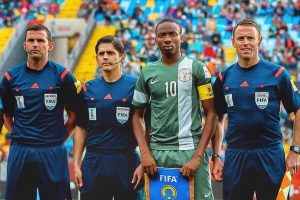
The 2015 tournament in Chile produced one of the strongest African collections of individual award winners. Nigeria successfully defended their title, with captain Kelechi Nwakali leading the way by claiming the Golden Ball.
The midfielder demonstrated leadership, composure and technical quality throughout the competition, helping Nigeria navigate a difficult route to the final. He also contributed three goals and three assists, collecting the Bronze Boot in addition to the tournament’s top player award.
However, it was Victor Osimhen who attracted considerable attention with his extraordinary goalscoring record.
The Nigerian striker scored 10 goals, setting a new record for the most goals by an individual player in a single FIFA U-17 World Cup edition at that time. Even more impressively, he scored in every match Nigeria played during the competition.
Osimhen’s goals were central to the Golden Eaglets’ successful title defence, and he scored the opening goal in their 2-0 final victory over Mali. He finished with the Golden Boot and Silver Ball, while Nwakali collected the Golden Ball.
Mali also had a reason to celebrate through goalkeeper Samuel Diarra, who received the Golden Glove. Diarra’s performances helped the West Africans reach the final, where they eventually finished as runners-up to Nigeria.
The 2015 tournament therefore produced three African Golden Award winners, with Nigeria claiming two and Mali taking the other.
2017–2025 – African talent remains visible, but the Golden honours go elsewhere
The editions between 2017 and 2025 did not produce another African winner of the Golden Ball, Golden Boot or Golden Glove.
However, Africa continued to make its presence felt, particularly through Mali’s performances in Indonesia in 2023.
Mali finished third at the tournament, with Hamadou Makalou winning the Silver Ball as the second-best player and captain Ibrahim Diarra receiving the Silver Boot after scoring five goals and providing four assists.

Comments 1