


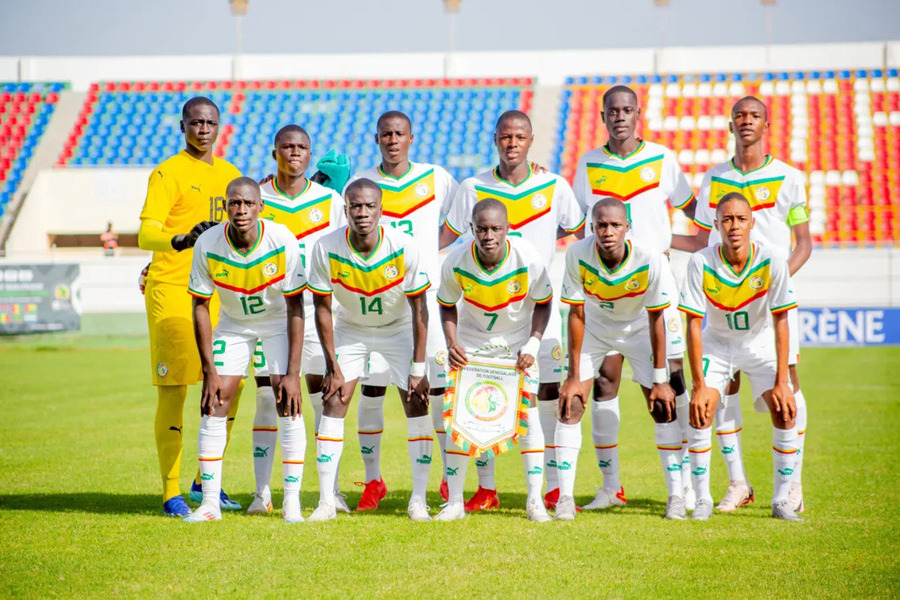
Africa will have 10 representatives at the 2026 FIFA U-17 World Cup in Qatar, with the continent hoping to make a strong impression at the expanded 48-team competition.
Senegal arrive as African champions and will be targeting a historic run, while Morocco will look to build on their impressive performances at the previous two editions.
Mali and Côte d’Ivoire also have the quality to challenge for places in the latter stages, but the draw has presented different reality for the African representatives.
With the top two teams in each group and the eight best third-placed sides advancing to the round of 32, Africafoot examines the groups and predicts how far each nation could progress.
Senegal – Group F: Croatia, Cuba and Tajikistan
Prediction: Final
Senegal are arguably Africa’s strongest contenders heading into the tournament. The Young Lions of Teranga arrive in Qatar as U-17 AFCON champions after defeating Tanzania in the 2026 final.
Their combination of technical quality, physical strength and tactical discipline makes them a dangerous opponent.
Croatia represent their biggest challenge in Group F, but Senegal should have enough quality to progress comfortably alongside Cuba and Tajikistan.
Having already demonstrated their ability to win continental silverware, the Senegalese have the potential to challenge for the world title.
Africafoot believes they could become the first African finalists since Nigeria in 2015.
Morocco – Group H: Spain, China and Fiji
Prediction: Semi-finals
Morocco have become one of Africa’s most exciting youth football nations. The Atlas Cubs reached the quarter-finals in both 2023 and 2025, demonstrating their growing competitiveness at the global level.
Their group assignment is demanding, particularly with Spain providing strong opposition.
However, Morocco have the technical ability and tournament experience to progress.
If they can overcome the challenge of Spain and maintain their consistency in the knockout rounds, the North Africans could reach the semi-finals.
Côte d’Ivoire – Group E: Italy, Jamaica and Uzbekistan
Prediction: Quarter-finals
Côte d’Ivoire will be eager to make a strong impression after securing qualification at the expense of several West African rivals, including Nigeria. The Young Elephants have the individual quality and physical attributes to compete at this level.
Italy will be their biggest examination in Group E, while Jamaica and Uzbekistan are also capable of causing problems.
The Ivorians should target qualification for the knockout stages, with a quarter-final appearance representing an achievable ambition.
Mali – Group G: Belgium, New Zealand and Vietnam
Prediction: Quarter-finals or round of 16
Mali have an impressive history in the competition, finishing runners-up in 2015 and third in 2023. The Junior Eagles possess considerable experience at this level and will be hoping to translate that pedigree into another strong campaign.
Belgium will provide their toughest group-stage challenge, but Mali should fancy their chances against New Zealand and Vietnam.
Their experience makes them one of the African teams capable of progressing beyond the round of 32.
A quarter-final appearance is possible, although the round of 16 remains a realistic alternative.
Uganda – Group B: South Korea, New Caledonia and Ecuador
Prediction: Round of 16
Uganda will be hoping to build on their impressive performance at the 2025 tournament. The Cubs reached the round of 16 on their debut, defeating Senegal before eventually losing to Burkina Faso.
Their experience from that campaign should be valuable in Qatar.
South Korea and Ecuador will provide difficult opposition, but Uganda have demonstrated that they can compete against established youth football nations.
Reaching the knockout stages should be their immediate target, with another round-of-16 appearance a realistic possibility.
FIFA U-17 World Cup 2026: Groups, teams and African nations to watch
Egypt – Group A: Qatar, Panama and Greece
Prediction: Round of 32
Egypt have an opportunity to progress from a competitive but manageable group. Hosts Qatar will enjoy home support, while Panama and Greece will also be determined to reach the knockout stages.
The Pharaohs must be consistent, particularly against Panama and Greece, if they are to secure qualification.
A place in the round of 32 should be their minimum target.
Algeria – Group J: USA, Montenegro and Chile
Prediction: Round of 32
Algeria face a challenging group containing the United States, Montenegro and Chile. The Americans and Chileans have considerable experience in youth international football, making qualification difficult.
However, Algeria have the opportunity to compete for one of the third-place qualification positions.
Progression to the knockout stages would represent a positive campaign for the North Africans.
Cameroon – Group K: Mexico, Romania and Venezuela
Prediction: Round of 32
Cameroon will be looking to make their presence felt against Mexico, Romania and Venezuela. Mexico’s experience at this level makes them a serious opponent, while Venezuela also have a competitive youth football structure.
The Indomitable Lions will need to demonstrate tactical discipline and attacking efficiency.
Their immediate ambition should be to reach the knockout stages.
Tanzania – Group I: Brazil, Republic of Ireland and Costa Rica
Prediction: Group-stage elimination
Tanzania face one of the toughest assignments among the African representatives. The Serengeti Boys qualified after reaching the final of the 2026 U-17 AFCON, where they lost to Senegal on penalties.
However, their World Cup group presents a considerably different challenge.
Five-time champions Brazil are the biggest obstacle, while Ireland and Costa Rica will also be difficult opponents.
Tanzania will need an exceptional campaign to progress, and Africafoot expects their journey to end in the group stage.
Mozambique – Group C: Argentina, Australia and Denmark
Prediction: Group-stage elimination
Mozambique will make their FIFA U-17 World Cup debut in Qatar, but their first appearance comes with a difficult group assignment. They face Argentina, Australia and Denmark, three opponents with the quality to challenge for qualification.
Argentina’s experience and technical ability make them particularly dangerous, while Denmark and Australia will provide further tests.
The Mambinhas will be hoping to gain valuable experience, but progressing from this group looks unlikely.
Can Africa produce another world champion?
Africa has a proud history at the FIFA U-17 World Cup, with Nigeria and Ghana winning seven titles between them. Although both countries failed to qualify for this tournament.
Senegal appear to have the strongest chance of leading the continent’s challenge in Qatar, while Morocco, Mali and Côte d’Ivoire could also enjoy impressive campaigns.
The expanded format offers more opportunities for African nations, but the quality of opposition will increase as the competition enters the knockout stages.

Comments 1